Introduction
The foundations are critical to the design of a structure. The foundation design has to cover a range of loading conditions:
The foundation design is usually one of 2 types 'pile' or 'gravity based'.
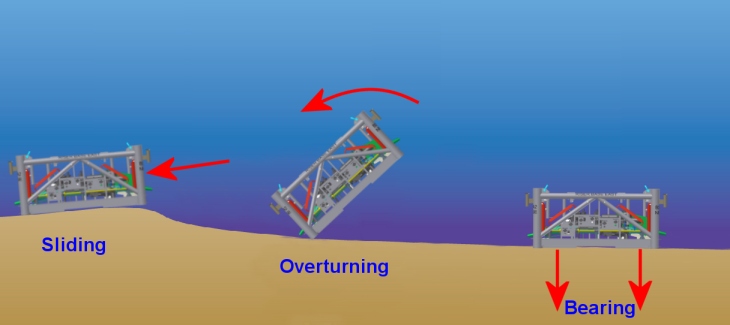
Gravity based foundtaions generally considers 3 possible modes of failure:
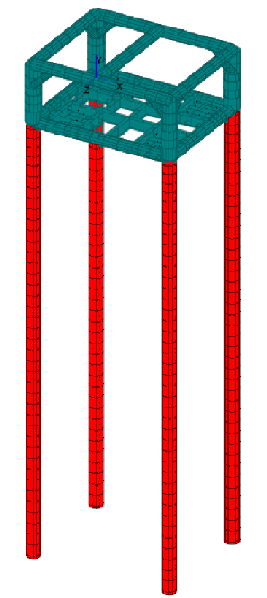
Pile based foundations generally consider the following modes of failure:
Notable Projects
Project Name |
Project Number |
Notes |
Wage Paladin |
KW 694 |
CATS Tee Tie-In Structure |
West DON & DON South West |
KW 1009 |
Riser Base Structure Subsea Distribution Unit Protection Strucutre SSIV Protection Structure |
Codes & Standards
Company |
Title |
Doc Number / Date |
API |
API-RP-2A |
|
Books
Author |
Title |
Chapter |
Related Subjects
Structural Global Analyses
Structural Appurtenances
Dropped Objects
Lifting
Weight Take Off
Structural Foundations
The calculations for the foundation capacity checks are a function of the loading, foundation size and soil parameters.
Skirts on gravity based foundations can be utilised to provide greater sliding resistance. The skirts penetrate into the soils and provide greater resistance to sliding. However, sometimes the full penetration of the skirts into the soils cannot be guaranteed.
The presence of a structure on the seabed affects the local flow of water in the vacinity. This results in a possibility of 'scour' occurring. For foundation design, 'scour' is considered as the movement of soils from the area where it is providing foundation support. Scour may be addressed by the use of a 'rip-rap', which acts as a cover for the soils, restricting the movement of soils in the area of foundations.